Sonoma Wine Country Trip Planning: A First-Timer's Guide
Sonoma County holds more than 425 wineries across 19 distinct growing regions, and a first trip goes best with a few decisions made in advance: when to visit, what a tasting actually costs, how many wineries to book, and who drives. This guide works through each one with current numbers.
Short answer
Plan 2 to 3 wineries per day, budget roughly $47 for a standard tasting (checked September 2026), and visit between late spring and October. Harvest runs August through October, and 2026 started unusually early, in late July. A guided tour from around $148 per person solves the driving question for first-timers.
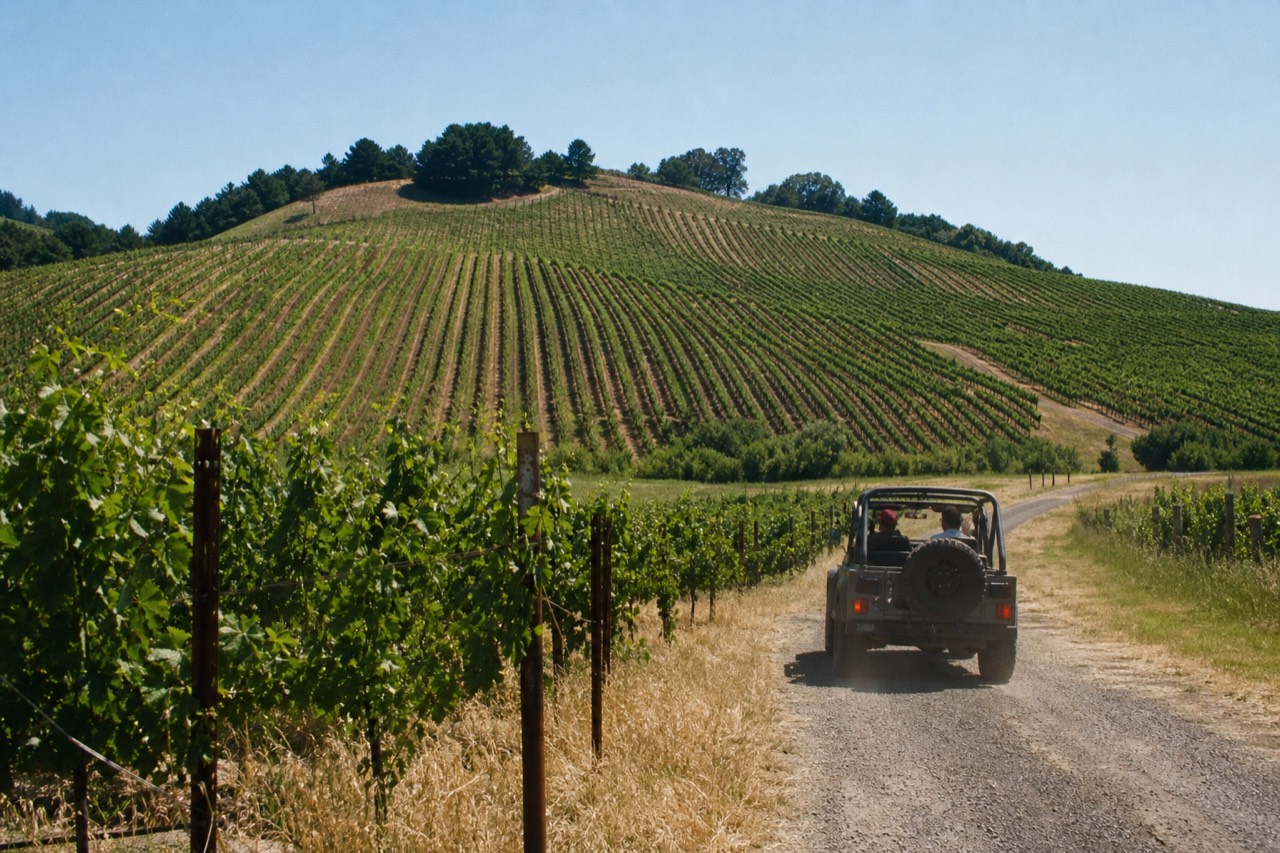
Sonoma County is home to more than 425 wineries spread across 19 federally recognized American Viticultural Areas, from the cool Russian River Valley to the warm benchlands of Alexander Valley. That scale is the whole reason planning matters here. Napa Valley funnels most visitors down a single corridor; Sonoma asks you to pick a corner of the county and settle in, because Sonoma Plaza, Healdsburg, and Santa Rosa sit 15 to 45 miles apart on winding roads.
This guide covers the decisions that shape a first trip: timing, budget, daily pace, base town, and whether to book a tour or drive yourself. Every figure comes from current research, and where a number moves with the season, it is flagged as such. Nothing here requires insider knowledge, just a willingness to make four or five choices before you leave home instead of after you arrive.
When is the best time to visit Sonoma wine country?
The best months for a first visit are May through October, with harvest season (August through October) the busiest and most atmospheric window, and 2026 harvest activity began unusually early, with reports from Alexander Valley and Russian River Valley as soon as late July.
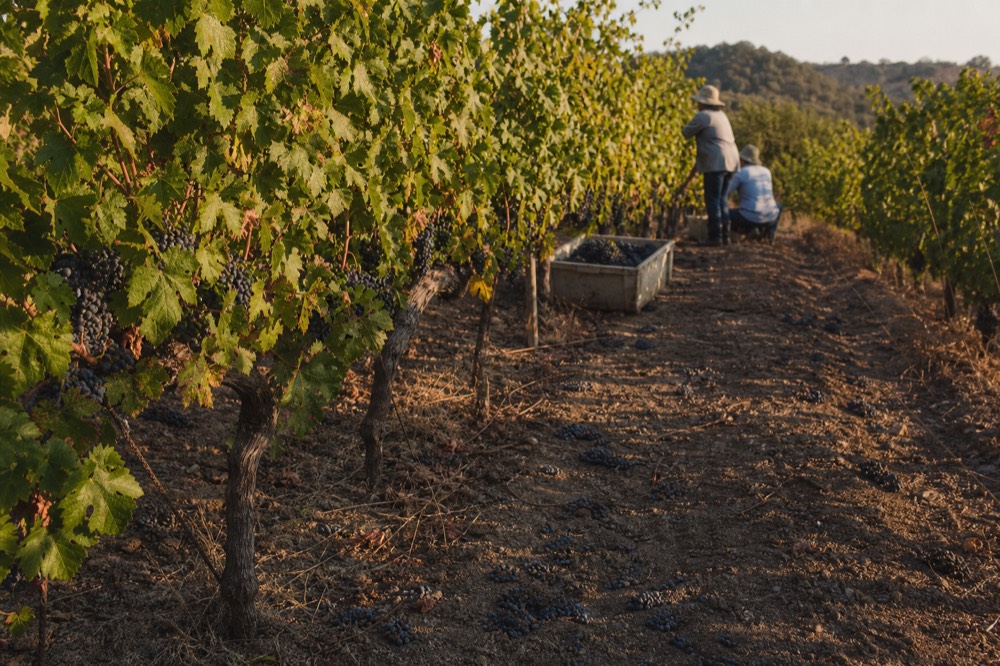
Harvest, or crush, is when the county feels most alive. Pickers move through the rows in the early morning, crush pads run at full tilt, and the whole valley smells of fermenting fruit. The tradeoff is crowds: tasting rooms are busier, and rural roads carry more truck and vineyard traffic. The Sonoma County Winegrowers association tracks harvest progress by region, and 2025 ran on schedule with about ten weeks of picking under mild conditions, while 2026 came in as one of the earliest starts on record.
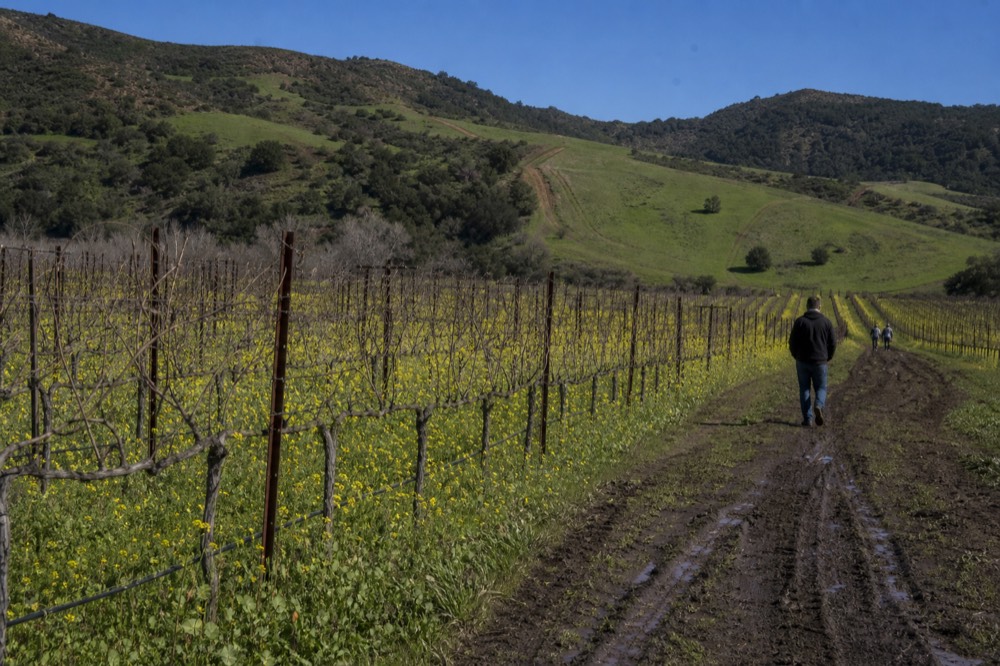
Spring and late autumn are the quieter alternatives. Mustard blooms appear in the vineyards in winter and early spring, painting the rows yellow, though the exact timing shifts with the weather each year and no reliable date forecast exists. Weekdays year-round bring thinner crowds, and midweek walk-ins at town tasting rooms are far more feasible than they are on a summer Saturday. November through April is the rainy season, and while a wet day can scrub a patio plan, it also brings the quietest tasting rooms of the year and staff with time to talk.
| Season | What it's like | Planning note |
|---|---|---|
| Late June to mid-September | Warm, dry, reliably sunny | Best weather, biggest crowds; book tastings ahead |
| August to October | Harvest activity, energetic vibe | Busiest tasting rooms; 2026 crush started in late July |
| November to April | Rainy season, quiet rooms | Fewer visitors; February averages about 4.9 inches of rain |
| Weekdays, any season | Shorter waits, easier walk-ins | Best bet for spontaneous tasting stops |
How much does a wine tasting in Sonoma actually cost?
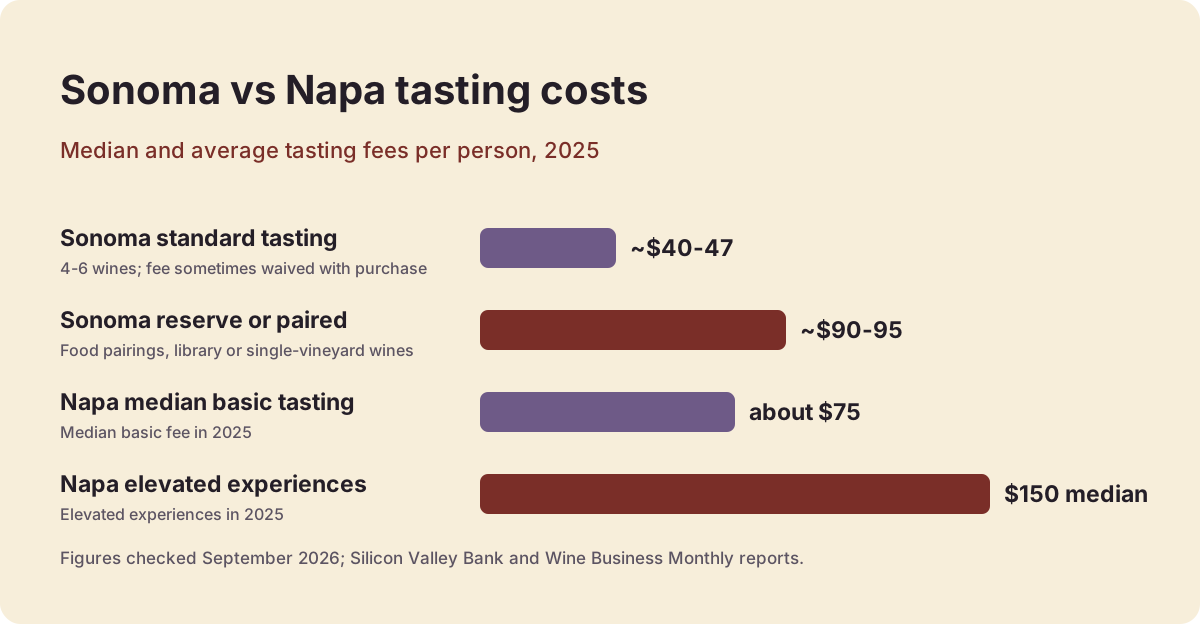
A standard tasting in Sonoma County averaged about $47 per person in 2025, down $7 from the year before, with reserve and paired experiences averaging near $95, and a full day at two to three wineries can easily run $100 to $200 per person before transport and food (all figures checked September 2026).
Two 2026 industry reports give a slightly different picture depending on methodology. A Silicon Valley Bank direct-to-consumer report put the average standard fee at $47, with roughly 30% of wineries lowering prices as traffic softened. Wine Business Monthly's survey put the median basic flight near $40, with elevated experiences at a $90 median, up 44%. Both point the same direction: standard tastings sit mostly in the $35 to $50 range, and premium tastings in the $50 to $100+ (checked September 2026) range.
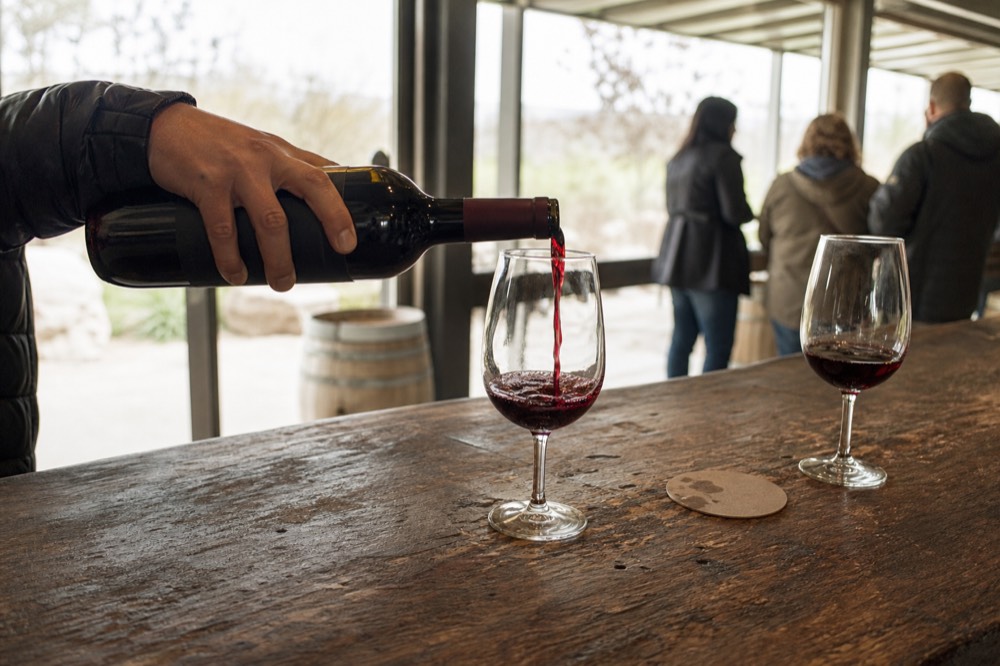
Tasting fees usually cover four to six wines. Many wineries waive the fee with a bottle purchase, though that practice is less universal than it was before 2020. Tipping is customary, generally $5 to $15 per person (checked September 2026) or 15 to 20%. For budgeting, treat two wineries with a lunch stop as a realistic $100 to $200 day per person, tasting fees only, and add transport on top. Groups of four splitting a private vehicle often land close to the same all-in number as four separate join-in bookings, which is worth doing the math on before assuming the group tour is always cheaper.
| Experience type | Typical cost per person | Notes |
|---|---|---|
| Standard tasting flight | ~$40-47 (checked September 2026) | 4-6 wines; fee sometimes waived with purchase |
| Reserve or paired tasting | ~$90-95 (checked September 2026) | Food pairings, library or single-vineyard wines |
| Full day, 2-3 wineries | $100-200+ | Fees plus lunch, before transport |
For context on how that compares across the county line, Napa's median basic tasting fee reached about $75 in 2025 and elevated experiences hit a $150 median (checked September 2026). Sonoma remains the value side of the pairing, which is one reason first-timers often start here. If a booked tour fits your plans, the format and pricing options below are the main ones.
How many wineries should you visit in a day?
Two to three wineries per day is the sweet spot in Sonoma, with four as the practical maximum; travelers consistently report that more than that turns the day into a rushed checklist, flattens your palate by mid-afternoon, and leaves you checking the clock instead of the scenery.
This is one point where experienced visitors and the tourism board agree. Sonoma County Tourism advises capping at three to four stops to avoid the checklist mentality, and forum threads from recent years say the same thing in blunter terms: lingering, asking questions, and walking the property is where a tasting becomes a memory rather than a transaction. Palate fatigue is real, and it usually arrives around the fourth flight of the day. A slower pace also leaves room for the unplanned stops, a farm stand, an olive oil tasting, a long lunch, that people remember as fondly as any pour.
Distance is the second limiter. Sonoma County covers roughly 1,576 square miles, and the AVAs are strung along two-lane roads. Staying inside one sub-region per day, Sonoma Valley one day, Dry Creek and Healdsburg another, keeps drive times in the 10 to 20 minute range between stops instead of an hour. The county's official AVA guide is a reliable map for drawing those daily circles.
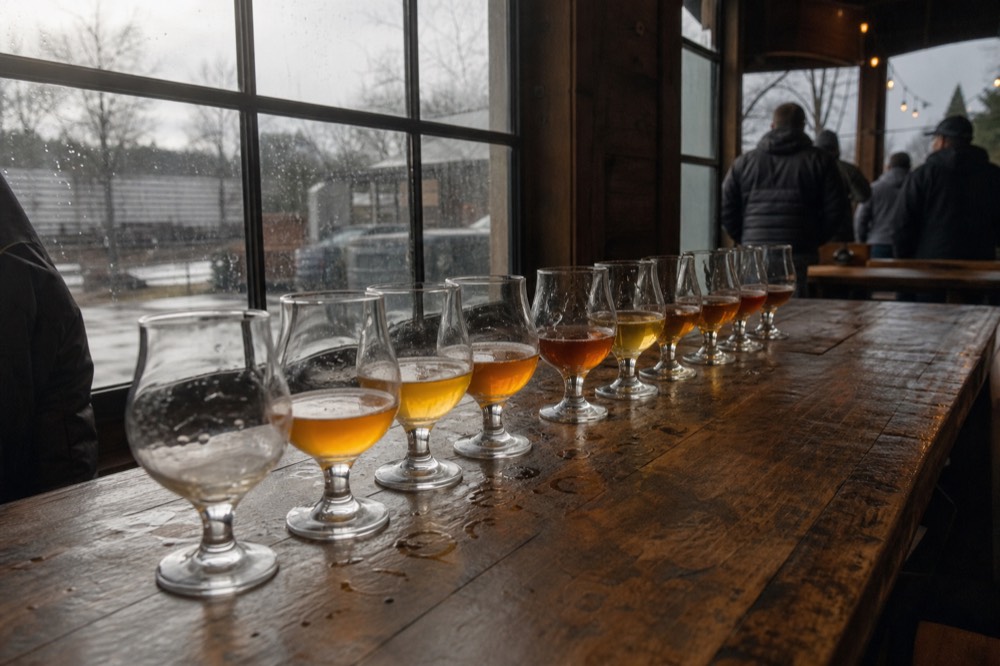
If you would rather not pace the day yourself, this is where a join-in tour earns its keep. The Sonoma County Join-In Group Wine Tasting Tour visits three wineries in a half day with hotel pickup in Sonoma or Santa Rosa, is rated 4.9 across 160 reviews (checked September 2026), and runs from $147.99 per person with tasting fees extra.
Sonoma Valley or Sonoma County: where should a first-timer base?
Base in the town of Sonoma for history and a walkable plaza, or in Healdsburg for northern Sonoma's concentration of tasting rooms; the two towns sit roughly 45 miles apart, about a 54 minute drive, so pick one rather than splitting the trip.
The distinction trips up a lot of first-time visitors. Sonoma Valley is the town of Sonoma and its surrounding AVA in the county's southeast corner. Sonoma County is the whole jurisdiction, including Healdsburg, Santa Rosa, and the Russian River, Dry Creek, and Alexander valleys. The town of Sonoma centers on a historic Spanish colonial plaza, a National Historic Landmark lined with more than two dozen tasting rooms, and it carries a slower, hometown pace. Lodging there also tends to run cheaper than its northern rival.
Healdsburg sits where three top AVAs converge and skews more upscale, with around 40 walkable tasting rooms off its own plaza and a nationally recognized dining scene, including SingleThread, which holds three Michelin stars. Santa Rosa works as a practical middle hub, about 15 miles and 20 minutes from Healdsburg, often with cheaper lodging than either plaza town.
| Base town | Best for | Character |
|---|---|---|
| Sonoma (Sonoma Valley) | History, walkable Plaza, southern AVAs | Relaxed, unhurried, classic first-timer feel |
| Healdsburg | Dry Creek, Russian River, Alexander Valley | Design-conscious, artisan producers, high-end dining |
| Santa Rosa | Value lodging, county-wide access | Practical hub between the two |
For a deeper comparison before you commit, the Healdsburg or Sonoma comparison walks through the tradeoffs in detail, and the Sonoma Valley versus Sonoma County explainer covers the geography. If your time is short, one town with day trips into a single adjacent valley beats a two-town scramble. The drive between the two plazas alone eats nearly an hour each way, and that is on a good traffic day.
Should you book a guided tour or drive yourself?
A guided tour is worth it for first-timers who want safety, pacing and local knowledge handled, while self-guiding suits repeat visitors and anyone who values spontaneity over convenience; both work, but the tour removes the DUI question entirely, since California's limit is 0.08% BAC.
Recent traveler reviews of guided Sonoma tours consistently praise the guides' knowledge, the logistics being handled, and the access to smaller producers a visitor would not find alone. The criticism is the mirror image: fixed schedules, less flexibility, and added cost. Self-guiding flips those exactly. You gain spontaneity and can walk into midweek town tasting rooms without a booking, but you inherit reservations, route planning, and the driving question, which matters after four flights of wine.
The honest middle path is one booked day plus one self-guided or car-free day. A guided join-in or trolley day on arrival teaches you the region's geography and gives you vocabulary, then your second day, informed, goes where the first day's discoveries point. Visitors who self-drive should plan one designated driver or cap at two wineries with food between them.
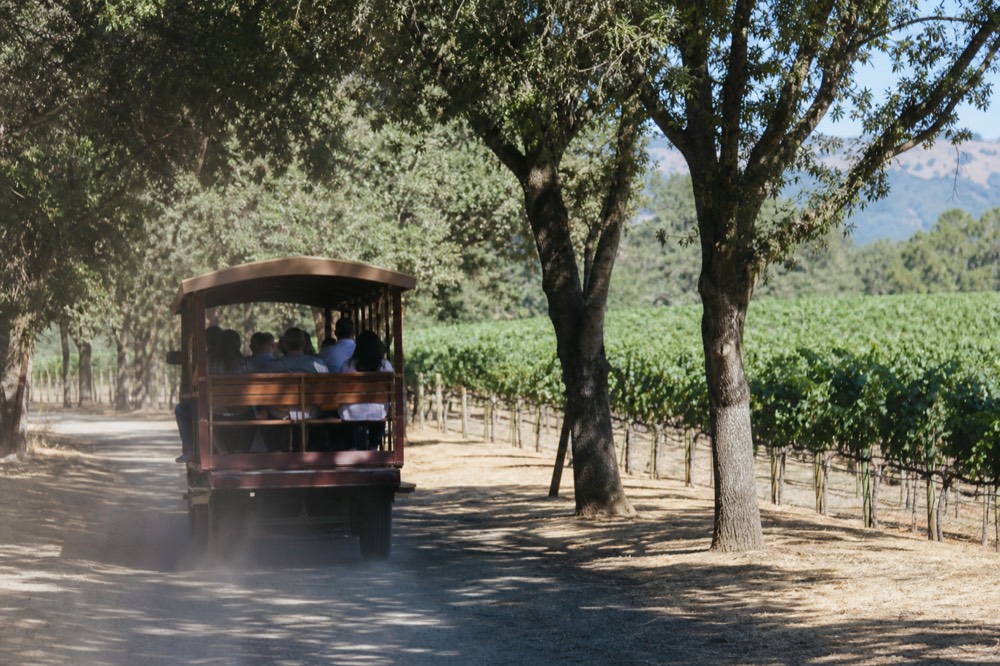
The featured join-in group tour above is the strongest-verified option on this site's roster for that first booked day. For a full rundown of both sides, the guided versus self-guided comparison goes deeper than this section can, and the private-tour options on the roster cover the chauffeured alternative for groups and special occasions.
How do you get to Sonoma wine country without a car?
San Francisco to Sonoma Plaza is about 44 miles and roughly an hour's drive in normal traffic, but the practical car-free options are a guided tour with pickup, or public transit combinations that take 2.5 to 3.5 hours each way, so most car-free visitors book a tour.
Traffic shapes the drive more than distance does. Friday afternoons and weekends add substantial delays around Marin County, the Golden Gate Bridge, Novato, and Highway 37, and rush hours run roughly 7:30 to 9:30 a.m. and 4 to 7 p.m. Departing before 7 a.m. or after 9 a.m. saves real time. Public transit exists, a Golden Gate Transit bus, the SMART train, and a local Sonoma County Transit connection, but the last runs limit evening flexibility, which is why forums repeatedly steer day-trippers toward booked tours instead.
Inside wine country, walking works in exactly two places: Sonoma Plaza and downtown Healdsburg, where dozens of tasting rooms cluster within a few blocks. Everywhere else you need wheels, and that is the argument that leads most first-timers to a tour, a trolley, or a private driver. It is also why this site, Sonoma Wine Tours, organizes its coverage around formats and base towns rather than individual wineries: the transport decision comes first, and everything else follows from it.
The Sonoma Valley Open-Air Wine Trolley is the region's signature car-free format: a replica 1890s cable car running about 6.5 hours from Sonoma Plaza with lunch included, rated 4.6 across 876 reviews, with the price listed on the live listing and tasting fees extra (checked September 2026). For a fuller picture of the vehicle, the stops, and how the day flows, the Sonoma Valley Wine Trolley guide covers it in depth.
What about wildfire season and air quality?
Sonoma County's wildfire risk window runs roughly June through November, peaking from late August to mid-October when harvest crowds overlap with Diablo winds, so build a flexible itinerary and monitor air quality indexes during those months rather than avoiding the season outright.
This deserves straight talk because most first-timer guides skip it. Smoke season overlaps with the most popular visiting window. An AQI spike can close tasting patios and dull an otherwise perfect September day, and the risk is real enough that trip insurance and refundable bookings matter for peak-season plans. The county's vineyards and tasting rooms are far more resilient than headlines suggest, and plenty of harvest-season days are flawless, but a plan with slack in it, one bookable-at-short-notice day, or an indoor-heavy backup like Plaza tasting rooms, absorbs a bad air day without sinking the trip.
The rest of the year is simpler. Sonoma has a Mediterranean climate: warm dry summers, a rainy season from November to April, and the wettest months, like February, averaging under five inches of rain. Winter visits trade green hills and mustard blooms for occasional soggy days and the quietest tasting rooms of the year.
What does a realistic first-timer itinerary look like?
A solid first Sonoma itinerary is two days based in one town: day one a guided or trolley tour of three wineries, day two a self-guided morning in one valley plus an afternoon on the Plaza or in Healdsburg, with lunch reserved and every tasting booked ahead.
The sample below assumes a Sonoma Valley base, the friendliest starting point for a first trip. Scale the same logic to Healdsburg by swapping in Dry Creek Valley. Reservation policies tightened after 2020, and walk-ins at estate wineries are increasingly rare on weekends, so book stops before you travel.
| Day | Morning | Afternoon | Evening |
|---|---|---|---|
| 1 | Guided join-in or trolley tour, 3 wineries, transport handled | Tour continues, lunch included | Dinner on Sonoma Plaza |
| 2 | One booked tasting in Sonoma Valley or Carneros | Two Plaza tasting rooms on foot | Tuesday Night Market, May to September |
For travelers with three or more days, add a northern loop: Healdsburg's tasting rooms and a Dry Creek or Russian River winery, keeping to one valley per day as above. Sonoma County Tourism's itinerary pages publish several official variations worth cross-checking against your own pace.
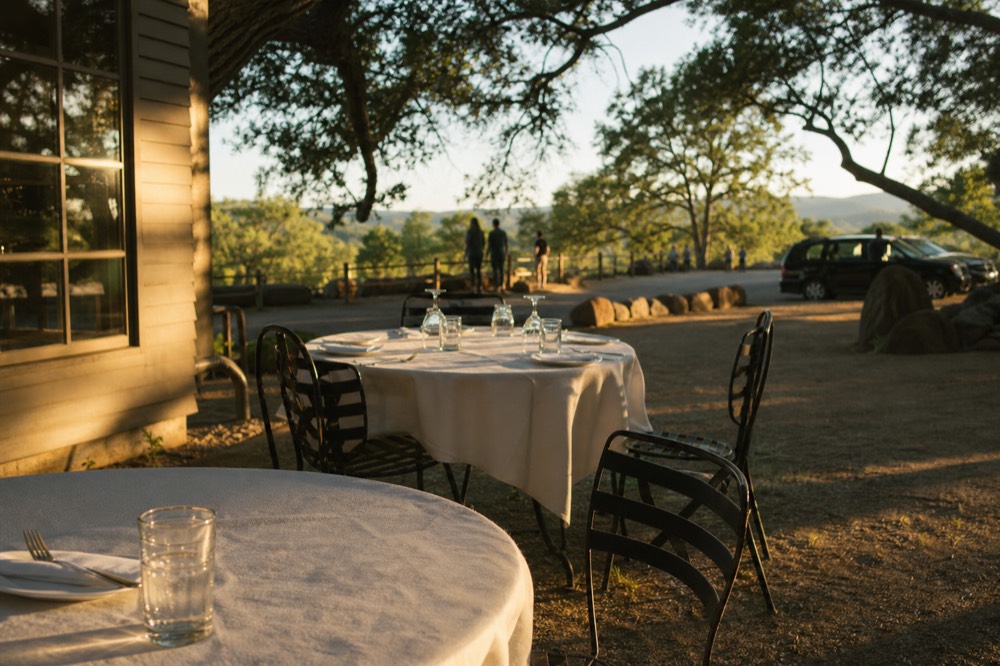
Groups and special occasions usually upgrade the private route, and the 8-Hour Private Sonoma or Napa Wine Tour runs from $449 per group in an XL SUV with a concierge-style driver and your choice of routing, rated 4.9 across 144 reviews (checked September 2026). Private touring also lets you fold in a Napa stop, since downtown Sonoma to downtown Napa is only about 14 miles and 20 to 24 minutes apart, though a one-county day almost always runs smoother than a two-county sprint.
The short answers: visit May through October, budget about $47 per standard tasting, cap yourself at three wineries a day, and let a guided tour handle the driving on at least one of those days. (checked September 2026)
Common questions about Sonoma wine country trip planning
When is the best time to visit Sonoma wine country?
May through October for reliable weather, with August through October adding harvest energy at the cost of bigger crowds. 2026 harvest started unusually early, with activity reported in late July. Weekdays year-round bring the thinnest crowds.
How much does a wine tasting cost in Sonoma?
Standard tastings averaged about $47 per person in 2025, with medians near $40 and reserve experiences around $90 to $95 (checked September 2026). Budget $100 to $200 per person for a full day at two to three wineries before transport.
How many wineries should you visit in a day in Sonoma?
Two to three is the sweet spot, four is the practical maximum. More stops than that turns the day rushed and flattens your palate; Sonoma County Tourism advises against the checklist mentality.
Should you book a tour or drive yourself in Sonoma?
Book a tour if you want pacing, safety and local knowledge handled; self-drive suits repeat visitors who value spontaneity. Many first-timers do one guided day plus one self-guided day.
Can you visit Sonoma wine country without a car?
Yes, but not easily by transit, which takes 2.5 to 3.5 hours each way from San Francisco. The practical car-free options are guided tours with hotel pickup, the open-air trolley from Sonoma Plaza, and walking the tasting rooms of Sonoma Plaza or downtown Healdsburg.
Is wildfire season a reason to avoid Sonoma?
No, but plan around it. Risk runs roughly June through November, peaking late August to mid-October. Keep the itinerary flexible, monitor air quality, and keep bookings refundable during peak months.
Whether you start with a join-in group day, the trolley, or a private driver, the plan that works is the one that leaves room between stops. Book the spine of the trip, leave the afternoons loose, and let the first day's tastings tell you where the second day should go.
Match The Day To Your Plans And Compare Costs
Editorial starting point. Confirm your party's age, access needs and departure details on the listing.
Sonoma Valley Open Air Wine Trolley Tour: Lunch included; tasting fees extra at each winery Not included: Tasting fees paid separately at each stop; 21 and over About 6.5 hours
8-Hour Private Sonoma or Napa Wine Tour with Concierge Service: Private vehicle and driver, hotel pickup, custom routing Not included: Tasting fees typically extra; confirm on the listing Full day (about 8 hours)
Compare Your Actual Quotes
Use the same currency for both totals, including transport, tastings and lunch. This compares your quotes, not live prices.
Compare what each total includes: a driver, tasting fees, lunch and the time you would spend arranging reservations.